
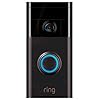
 Ring Wi-Fi Smart Video Doorbell - Venetian Bronze
 Subtotal: $94.95
Bookkeeping
To Contract or Not to Contract? Dice com Career Advice
For career progression, contractors must rely heavily on self-marketing, networking, and skill development outside of project work. Whether you’re seeking the stability and benefits of a full-time role or the flexibility and variety of a contract position, it’s essential to understand what each option really entails. Drawing from my own experiences navigating these varied roles, I hope to offer insights that will help you choose the best fit for your career goals. You failed to mention that you might want to work for a company if you are focused in the technical aspect of your job or have a high degree of specialization.
Myth 2: Contractors cost more in the long run
- I have qualifications and work experience in Engineering and Physics, writing, editing and line management experience, so I feel I have useful skills.
- Access all ongoing onboarding activities on one easy-to-view dashboard and pay employees on time and in their local currency.
- With the creation of Universal Healthcare, fewer people should feel tethered to a job they dislike due to their benefits.
- Eventually, these people can become your full-time staff (especially if you offer remote work options).
- Next to that, It is my 5-10 year goal to become a freelancer, having my own business that can work for clients.
When I left Corporate America in the Spring of 2012, I thought I’d never return. But in November 2013, I received an opportunity to contract for 25 hours a week. I did freelance for three startups for almost three years until I decided to focus more on Financial Samurai.
How to Successfully Integrate Contractors into Your Workforce
Which is the foundation of our collaborative approach that drives meaningful impact in the shortest amount of time. While they may not be long-term employees, integrating them into the team drives engagement and better results. Businesses avoid delays in productivity while maintaining project momentum. This kind of employment classification supports continuity without long-term commitment. For clearly defined deliverables with a fixed period of time, using a contractor makes strategic sense. Their independence from company culture often fosters new ideas and agile problem-solving—especially in creative or tech environments, these fresh viewpoints can accelerate innovation and growth.
Benefits of hiring full-time employees
Freelancers and contractors typically show the same dedication to quality of work as employees. However, they don’t have the same level of loyalty to one employer. A worker’s legal classification as an employee or an independent contractor depends on several factors, including control, independence and the nature of the work being performed. But once you understand the legal framework, the right choice ultimately comes down to your business’s specific needs. Hired employees create a reliable, consistent team to work on projects as needed. After the initial hiring process, you won’t have to constantly negotiate contracts with new talent or wonder if they’re capable of completing the tasks you hired them do contractors earn more than full-time employees dice com career advice for.
Salary Negotiation Mastery
Beyond salary, full-time positions bring hidden expenses such as employment classification costs, equipment, training time, and coverage for potential downtime. However, as mentioned earlier, that hourly rate often reflects the absence of employment benefits like retirement contributions, health insurance benefits, and paid leave. Comparing the real cost of full-time vs. contractors means considering salary vs. hourly rate, hidden costs of full-time employees, hidden costs of contractors, and delivering on niche needs. While many contract jobs start on a project basis, it’s increasingly common to see contractors embedded in teams for an extended period of time.
Employees give you more control over operations.
Weigh the relationship between jobs and salaries with our real-time Career Growth Planner. Take advantage of our Cost-of-Living Calculator to compare costs for different cities based on your annual salary. However, they may want the stability of a full-time (or even part-time) position with your company. U.S. lawmakers haven’t created many distinctions between full- and part-time workers (hence, my use of “full-time” throughout this article).
I know 2 people in temporary CIO/CTO gigs right now, one in Phoenix and the other on the east coast. Each of them are on a 6-month contract and one has been renewed as the search continues. I’m what someone else termed a “contractor employee” aka a consultant. Immediate goals would be to reach “accredited” status in the next 2 to 4 years.
- Brand yourself online, connect with like-minded people, find new consulting gigs, and potentially make a good amount of income online one day by selling your product or recommending other great products.
- The value of contractors beyond the numbers includes their scalability, niche skill sets, reduced risk, and fresh perspectives.
- A contractor is not responsible for the overall strategy of a business unit or department.
- If I no longer needed the security/stability as a full time employee and preferred to work on a limited term basis, contract work would definitely work for me.
- Like I said, this is very industry specific, but worth noting it can vary greatly.
She walked me through several deductions I didn’t know I qualified for as a consultant, including partial rent for my home office and some software subscriptions I use for work.Definitely a legit service. When it comes to tax status, the choice between W-2 and C2C is significant, with W-2 offering convenience in tax management and C2C providing more control and potential deductions. Multi-tiered contracting further illustrates the complexity of contractor roles, adding additional layers to consider when evaluating the level of control, pay, and client relationship. As the landscape of work evolves, professionals today face a broad array of employment choices. Gone are the days when a full-time role was the only path to career growth and financial stability.
If you were a full time contractor and offered full time employee, did you get better pay/benefits?
However since software developers make pretty good money, I think this works out to $ an hour. Haven’t seen any offers yet, but I expect the contract roles are going to try to pay me in line with a non FTE salary. If it’s a W-2 contract position, then you can basically compare the full-time and contractor positions directly because the employer is paying the same costs as they would if you worked for them full-time.
I believe the average burdens and benefits markup for major companies is around 34% which includes maybe 0.5% markup. As a W2 employee, your employer typically covers a portion of your health insurance premiums with pre-tax dollars. This is HUGE and can more than offset the extra self-employment tax. Still, you may pay highly skilled contractors more than you would an employee. Be prepared to offer a higher rate, since they’re responsible for covering their own employment taxes, income taxes and insurance.
Contract roles allow businesses to experiment and evolve without risking compliance with complex employment laws. The value of contractors beyond the numbers includes their scalability, niche skill sets, reduced risk, and fresh perspectives. Rather than a sign of disconnection, their flexibility can be a competitive advantage for businesses navigating additional projects or evolving priorities.
Not all consultants are contractors; some contractors are consultants. Simply follow the money – if you’re paying a person directly for their expertise and their work, they’re a contractor. However, consultants could be paid by consulting companies as full-time employees of those businesses. Not only do full-time employees show a greater level of dedication to one employer than contractors, they also tend to stick around.
A simple way to determine if someone is a contractor is to ask, “How many people employ this person? ” If they have over three employers, they’re probably a freelancer. In today’s low-minimum-wage environment, many people use contract work to earn higher hourly wages – at least for some of their work hours.